The Ethical Freelancer: Managing Client Data Security on Public Wi-Fi
The Coffee Shop Trap: Is Your Client's Data on the Table?
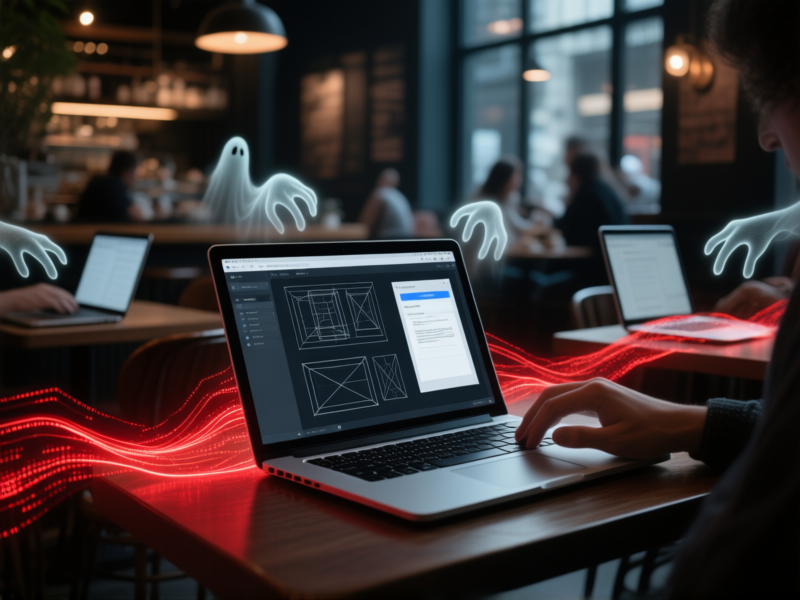
Picture the scene. You're at your favorite spot, latte half-gone, crushing a deadline. The public Wi-Fi is a blessing. But here's the thing: that "free" connection is probably the digital equivalent of shouting your client's financial forecast across the room. Everyone on that network, from the guy coding in the corner to someone running a packet sniffer, could be listening in. Your login for the project management tool? Your Dropbox link to the prototype? All broadcast in the clear. It doesn't matter how good your password is if you're sending it on a postcard.
Your Digital Bodyguard: Why a VPN is Non-Negotiable

You need a VPN. Full stop. Not the sketchy free one, but a reputable, paid service. Think of it as your private, encrypted tunnel through the chaos of a public network. It makes your computer appear somewhere else and, more importantly, scrambles everything you send and receive. To the coffee shop router—and anyone lurking—your traffic just looks like meaningless noise. It's the single most effective thing you can do. It's not just for "tech people" anymore. It's basic hygiene, like locking your front door. Your client trusts you. A VPN is how you honor that.
Beyond the VPN: Locking Down Your Actual Work
But a VPN isn't a magic wand. It protects the pipe, not what's inside. So what else? First, use a password manager. Every single account gets a unique, complex password. You only have to remember one. Enable two-factor authentication everywhere it's offered. Yes, the extra step is annoying. So is explaining to a client that their entire brand strategy got leaked because you couldn't be bothered with a 6-digit code. For sharing files, use services with end-to-end encryption or client-specific, password-protected links with expiration dates. Ditch the "ClientDocument_FINAL(1).pdf" email attachments.
Trust is Your Greatest Asset. Don't Burn It.
This isn't just about avoiding malware. It's about ethics. Your client hired you, not just for your skills, but because they trust you with their business. Their data is their livelihood. When you treat it casually, you're gambling with their reputation—and immolating yours. Word gets around. "Yeah, they're a great designer, but I heard they got hacked at a Starbucks..." is a death sentence for a solo business. Your professionalism is measured by your results *and* your process. Secure work *is* professional work.
The 5-Minute Security Checklist (Before You Hit "Connect")
Let's make this stupid simple. Before you open that client deck on public Wi-Fi, run this list. Turn your VPN on. Verify your critical apps (email, cloud) are using 2FA. Close any sensitive browser tabs or documents you don't immediately need. Make sure your OS and antivirus are up to date. And for goodness sake, be aware of your surroundings. "Shoulder surfing" is still a thing. A little paranoia is healthy. It means you give a damn.