Portugal's D7 vs. Digital Nomad Visa: Which is Better for Freelancers?
Portugal’s Two Golden Tickets for the Self-Employed
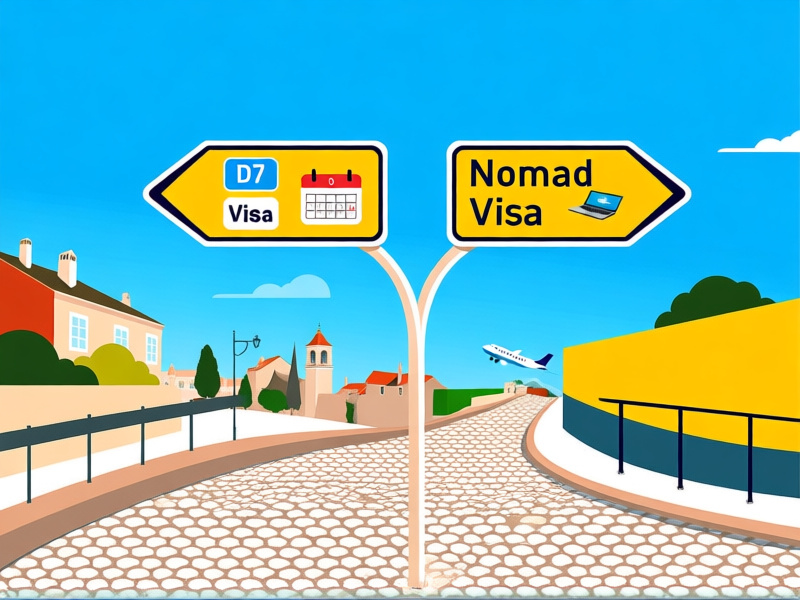
So you’re a freelancer. Portugal looks like a dream. Sunshine, pasteis de nata, and decent wifi. Now you're staring at two visas that could get you there: the classic D7 and the shiny new Digital Nomad Visa. It’s confusing, right? One’s for “passive income,” the other for “remote work.” But for a freelancer, the lines blur. Let’s cut through the noise. This isn't about which one is "better" in a vacuum. It's about which one is better for *your* specific situation. Grab a coffee (or a vinho). Let's break it down like we're figuring this out at a cafe in Porto.
D7 Visa: The OG Path to Portuguese Residency
First up, the D7. Don't let the boring name fool you. This is the granddaddy of Portuguese residency visas. It’s technically for folks with “passive income” – think pensions, rental property, dividends. But here’s the open secret: freelance income *can* qualify if you structure it right. The magic word here is "stability." You need to prove you have consistent, regular funds coming in that are high enough to support yourself. Think of it as proving you have a financial safety net. The goal? Get your temporary residency, renew it, and after five years, you’re on the path to permanent residency or even citizenship. It’s a long game, but a powerful one.
Digital Nomad Visa: The Fast-Track for Remote Workers
Enter the new kid on the block. Portugal’s Digital Nomad Visa is specifically designed for people who work *for a company* or clients *outside of Portugal*. It’s split into two types: a temporary stay visa (up to 1 year) and a residency permit (up to 5 years). For freelancers, this is often a more straightforward fit on paper. The requirement is simpler: prove you earn at least Portugal’s minimum monthly wage (times four, so about €3,040 per month as of now) from remote work. The process is designed to be quicker. Less about proving long-term financial stability, more about proving you’re a high-earning remote professional *right now*.
The Showdown: Income, Time, and Your Future Plans
Alright, let's get into the nitty-gritty. For income, the D7 has a lower monthly financial requirement (the Portuguese minimum wage, ~€760). But the Nomad Visa requires you to earn four times that (~€3,040). Big difference. But the *type* of proof matters. The D7 wants to see predictable, regular transfers into your account—like a salary or recurring client payments. The Nomad Visa just wants to see you hit that higher threshold; how steady it is matters less. On timelines, the Nomad Visa process can be faster initially. But for long-term plans? The D7 is the undisputed route to permanent residency. The Nomad Visa’s residency track is newer and the path post-5 years is less tested.
Paperwork, Taxes, and the Real-World Headache Factor
Let’s talk bureaucracy. Because that’s where dreams meet reality. Both visas require a mountain of paperwork: background checks, proof of health insurance, accommodation proof, etc. The D7 application is notorious for its scrutiny of your financials. You’ll need bank statements, maybe letters from clients, and a solid declaration of how you’ll support yourself. The Nomad Visa focuses more on proving your employment/contracts and hitting that income number. Now, taxes. This is critical. Getting either visa makes you a Portuguese tax resident. You’ll likely pay taxes on your worldwide income here, potentially at rates up to 48%. There’s a special NHR tax regime that can offer big benefits, but it's changing. Talk to a Portuguese tax accountant. Seriously. Do not skip this step.
So, Which One Should You Actually Choose?
Cutting to the chase. Choose the **D7 Visa** if your freelance income is stable and regular (like retained clients), you’re sure you want to build a long-term life in Portugal, and you’re comfortable proving your financial sustainability over time. You’re playing the long game. Choose the **Digital Nomad Visa** if your freelance income is high but maybe more variable or project-based, you want a faster, more straightforward application focused on current earnings, and you’re not 100% certain about staying forever. It gives you flexibility. For many freelancers, the D7 is still the golden ticket to a future in Portugal. But if your numbers are high and your plans are fluid, the Nomad Visa is a fantastic, legitimate shortcut. Just know what you’re trading off. Now, go check your bank statements.