How to Maintain Consistent Client Communication During Visa Application Chaos
The Visa Paperwork Tornado is Coming. Let's Talk.

Let's be real. Visa applications are pure, unadulterated chaos. One day you're a professional, the next you're sobbing over a missing, notarized copy of a birth certificate from 1990. You’re at the mercy of bureaucracies and postal services. It’s a special kind of hell. And while you're spiraling, your clients are in the dark, wondering why you're quiet. Silence isn't just awkward; it's a business killer. Here’s how we break the cycle, keep our sanity, and our clients happy.
Pre-Game the Panic: Setting Expectations Before the Storm
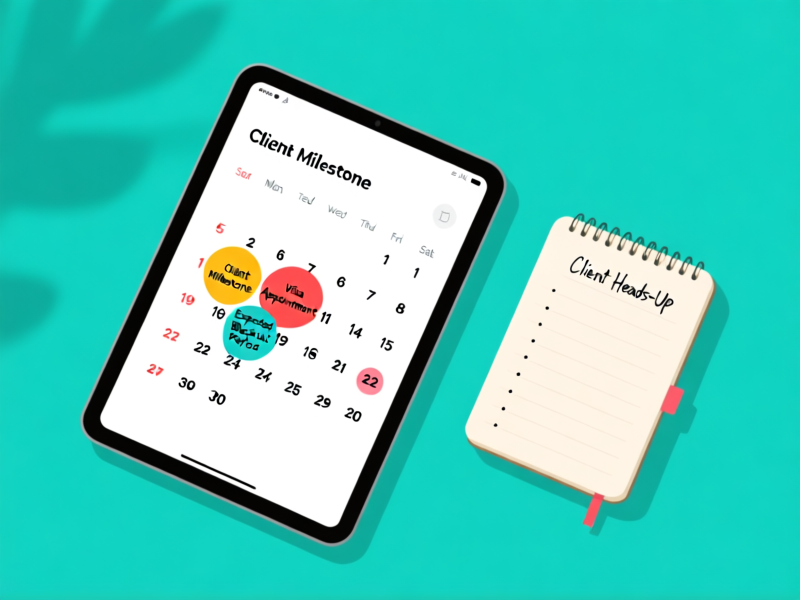
Don't wait for the chaos to hit. The moment you know you're applying, you tell your clients. Actually, you *preframe* it. Don’t frame it as a problem. Frame it as a managed part of your process. Send a short, calm email: "Hey, heads up—I'm in the visa renewal gauntlet over the next [timeframe]. I'll have full access, but there may be 1-2 days where I'm radio silent for embassy appointments. I've blocked my calendar and all project milestones are ahead of schedule." See what you did? You controlled the narrative. You're not a victim; you're a pro with a plan.
The Sacred "Status Update" Template (Your New Best Friend)
When you're in the thick of it, writing a thoughtful update feels impossible. So don't. Build a template. A simple, copy-paste beast you can fire off in 60 seconds. It looks like this: "Quick update! [Project] is on track. I've just [completed this]. Next up is [this]. On my end: Visa paperwork submitted today (no news is good news!). I'll be offline for my biometrics appointment on [Date] but will be back online by [Time]. Chat Tuesday as usual!" Pro-tip: put the client project news FIRST. It's not about your visa. It's about their project, with a side of your human reality.
Pick a Lane: One Communication Channel to Rule Them All
Here's a classic mistake. You email about the timeline. They Slack you a file. You miss it, so they text you. You're now managing the relationship across four different apps while also trying to find your apostilled diploma. Madness. Pick *one* primary channel for all official project updates. Email is king for this. Say it. "For all milestone updates and official feedback, let's keep it to email so nothing gets lost." Use other tools for quick questions, but the core stuff lives in one, searchable place. It cuts the mental clutter in half.
Transparency Isn't About Oversharing
Clients don't need the play-by-play. They don't need to know the embassy clerk was rude or that you waited in line for four hours. That’s just noise. Transparency is about the "what" and the "so what." What's happening? "My passport is with the consulate for stamping." So what? "I cannot travel for 7-10 days. This does not impact our remote work, but I will be unavailable for any courier signatures." Share the impact, not the drama. It builds immense trust because you're giving them the only information they actually need: how it affects them .
When it Hits the Fan, Lead with the Solution
Sometimes, it goes wrong. A delay. A request for more documents. A rejection. Your first instinct is to hide. Don't. The moment you know, you communicate. But here’s the key: you *lead with your solution*. Don't open with "OMG disaster!" Open with: "A visa snag came up. Here’s my plan to mitigate it: I've already [contacted my lawyer, reapplied via priority, etc.]. Our project timeline remains unchanged because I've [re-prioritized tasks this week]. I'll update you next Tuesday." You're not dumping a problem on their desk. You're showing them you're already handling it. That’s what professionals do. And then? You go fix it.