How to Handle Client Emergencies When You're 8 Time Zones Away
The 3 AM Panic Call: Your New Reality

Alright, let's get real. You built this freelance dream for freedom. Maybe you're in Lisbon sipping espresso while your biggest client is in L.A. dreaming of drive-thru burgers. It's fantastic. Until the nightmare hits. It's 3 AM. Your phone is screaming. You fumble for it, and a frantic voice is yelling about a website meltdown, a last-minute logo disaster, or a server that's just given up on life. Your brain is fog, they're in full panic mode, and you're eight hours ahead (or behind). This isn't an "if" scenario. It's a "when." And how you handle it decides if you get a raving fan or a raging ex-client. The chaos clock is ticking.
Set the Rules Before the House is on Fire
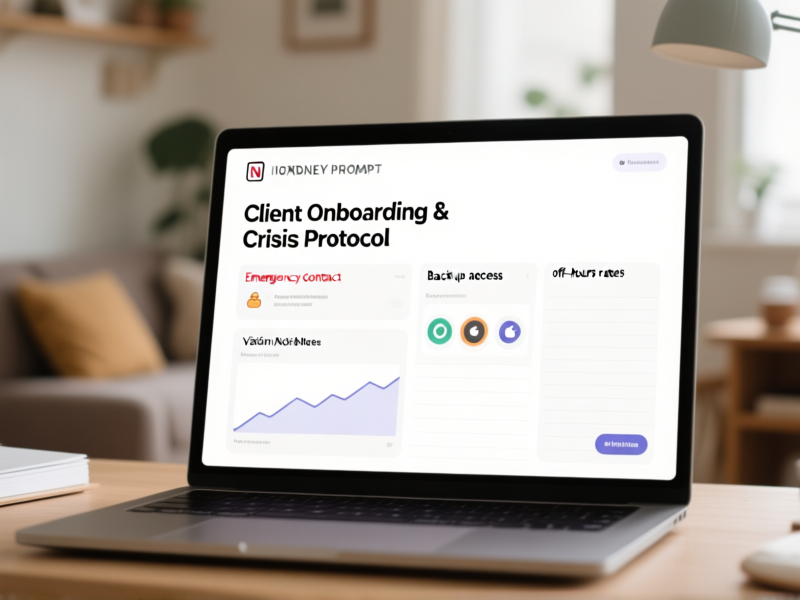
You can't prevent every fire. But you can absolutely prevent the "running around with a garden hose" routine. The secret weapon? Your onboarding process. Actually, it's a filter. Before you sign a contract, you have The Talk. Not about feelings, about logistics. You lay it out: "My working hours are X to Y your time. For anything urgent outside that window, here's the dedicated emergency Signal/Telegram channel. Expect a 1-hour response max, but it incurs the 'oh-god-why' overtime rate." Get it in writing. This isn't being a jerk. It's being a professional. It trains clients to respect your time and only hit the big red button for actual emergencies. Most "emergencies" suddenly become "tomorrow morning" issues.
Build Your Digital "Go-Bag"
When the call comes, you can't be scrambling for a password from 2019 in a random email thread. That's amateur hour. Your contingency plan is a living document. It's a password manager (like 1Password or Bitwarden) with every client login, updated quarterly. It's remote access software (Splashtop, AnyDesk) already installed on your devices and your client's critical systems. It’s a checklist in your project management tool: "Client X Emergency Steps: 1. Reset CDN. 2. Contact Hosting. 3. Client Comms Template." This "go-bag" turns a heart-pounding crisis into a calm, methodical drill. You're not a hero winging it. You're a technician following a procedure. Feels way better, trust me.
The Smart Workaround: It's Not All on You
Here's the thing: you are not an island. Especially not at 3 AM. The ultimate hack for the solo freelancer? Don't be so solo. For key clients, I have a reciprocal "backup buddy" agreement with another rock-solid freelancer in a *different* remote field (e.g., I'm the writer, she's the sysadmin). We have limited access to each other's critical client hubs. If my client's site goes down and I'm trekking in the Himalayas with no signal, she can at least get the hosting ticket started. I do the same for her copy emergencies. It's a safety net. It lets you actually, you know, sleep. Or hike. Or live the life you supposedly built this business for.
Communication Is the Cure for Chaos
A crisis is made 10x worse by radio silence. The moment you're aware, your first move isn't to fix the problem. It's to communicate. Send the "I'm on it" message. Even if you're half-asleep. "Hey [Client Name], got your alert. I've accessed the server and am investigating now. Next update in 15 minutes." Then set a timer and send another, even if it's "Still digging, no root cause yet." This transforms their experience from terrifying free-fall into a slightly bumpy but managed descent. They're not left wondering if you’re ignoring them. They see the work happening. This alone builds more trust than a year of perfect on-time deliveries.
Post-Mortem Without the "Dead" Part
The fire's out. Everyone's breathing again. Do not just vanish and send an invoice. That's a missed goldmine. Schedule a 15-minute call the next *normal* business day. Or better, send a short Loom video. Walk them through *what exactly happened* in plain English (not tech jargon), why it happened, and the one concrete thing you've now put in place so it never happens again. This is the magic. You're no longer the hired gun who fixed a bug. You're the strategic partner who turned a disaster into a system upgrade. They'll remember how you handled the meltdown long after they forget the meltdown itself. And that? That’s how you turn time zone hell into a competitive advantage.